Skip to content
Skip to content
Skip to content
Magnesium Machining
Milling and Turning of Magnesium Components
Experts in Magnesium Machining.
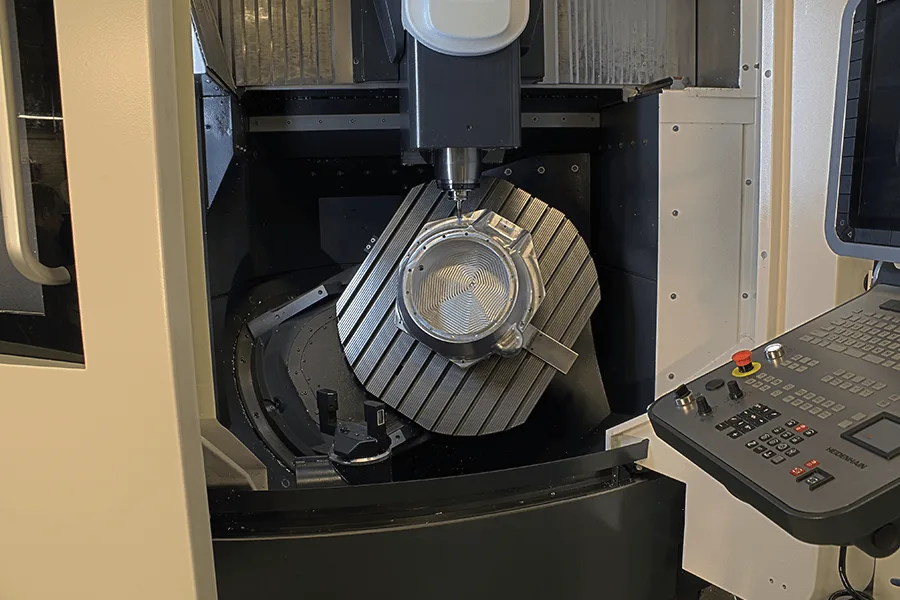
Magnesium Machining – Milling and Turning
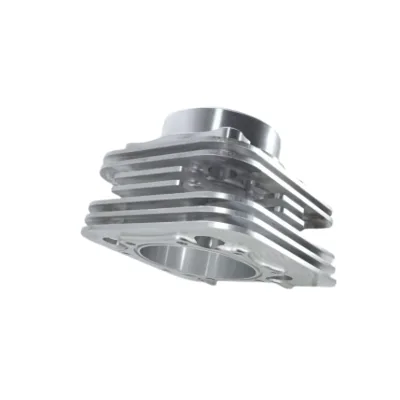
At Formkon, we are specialists in CNC machining of magnesium – with decades of experience in producing high-quality prototypes, special parts, and small to medium series.
All machining operations are performed in-house in our state-of-the-art facility using:
We deliver fast, reliable, and precise results, tailored to your exact specifications.
Full-Service Magnesium Machining – From Raw Block to Finished Component
We produce prototypes and small to medium series in magnesium – ideal for defence, aerospace, medical, and e-mobility.
Lightweight, precise, and fast – from first sample to finished part.
We offer full traceability and quality control. After machining, your parts can be:
We typically machine parts from:
Alternatively, we can produce cast magnesium blocks in our own foundry using:
This gives you flexibility in both material choice and delivery time.
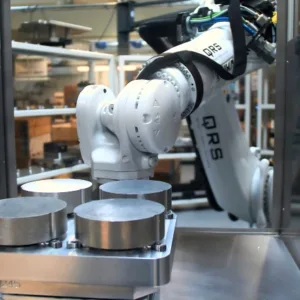
Industries we supply machined magnesium components to:
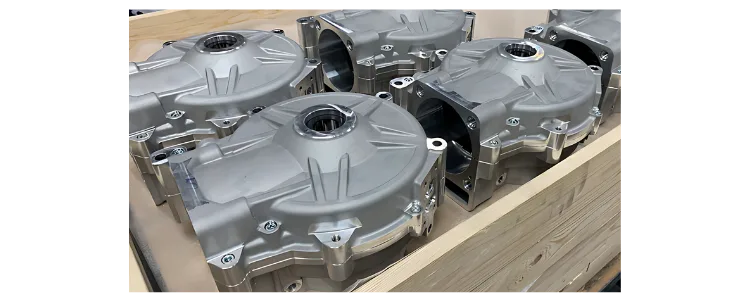
Our facilities for manufacturing prototypes and small series
Advantages of Machined Magnesium Components
Machined magnesium components are exceptionally lightweight, easy to machine, and ideal for applications where weight reduction is critical—without compromising structural integrity.
Surface Treatment Options for Magnesium Components
Why surface treatment us essential. Magnesium offers excellent advantages in terms of strength-to-weight ratio, but it also has natural vulnerabilities—especially regarding corrosion and wear resistance. Proper surface treatments effectively address these weaknesses and help ensure consistent quality, durability, and long-term performance of the final component.
We typically offer the following three surface treatment options:
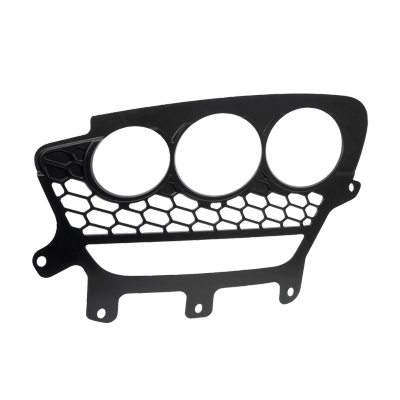
Most Commonly Used Magnesium Alloys
Magnesium AZ31 – Excellent formability and weldability
Magnesium AZ61 – Good strength-to-weight ratio
Magnesium AZ80 – High strength and creep resistance
Magnesium AZ91 (casted in-house) – Good corrosion resistance and castability

Get Your Custom Quote
All Our Technologies for magnesium parts
Investment Casting Aluminium and Magnesium – Fast Prototype Production
With 3D-printed master models for rapid delivery times.
Die Casting of Aluminium and Magnesium – Near-Series Prototypes
Production-like prototypes for optimal testing.
CNC Machining of Aluminium and Magnesium – High-Precision Milling & Turning
For ultra-precise components and fast adjustments.
Magnesium Component Manufacturing – CNC Machining & Prototyping
Magnesium vs. Aluminium
Magnesium and aluminium are both lightweight metals with excellent machinability, each offering distinct advantages. Magnesium is about 30 % lighter than aluminium, making it ideal for weight-optimized components. Aluminium, on the other hand, is often preferred when higher strength and corrosion resistance are required. The choice depends on the specific project requirements, such as weight, strength, and the type of prototype testing.
Magnesium Milling vs. Magnesium Turning – Differences and Advantages
The CNC machining of magnesium parts can be carried out using two main processes: milling and turning. Both methods are excellent for producing precise magnesium components, but they differ in their application and their respective benefits.
Magnesium Milling
In milling, material is removed step by step using rotating cutting tools. This process is especially suited to complex geometries, free-form surfaces, pockets, bores, or thin-walled structures. Magnesium milling offers high design flexibility, excellent surface finishes, and allows for multi-axis machining. It is ideal for prototypes and precise small-batch production.
Magnesium Turning
Turning is a subtractive process in which the workpiece rotates while the cutting tool is held stationary. Magnesium turning is primarily used for rotationally symmetric parts such as shafts, bushings, or rings. The key advantages are efficiency and speed—particularly for larger quantities. Turning also provides superb dimensional accuracy and repeatability.
Choosing the Ideal Machining Method
The choice between magnesium milling and magnesium turning depends on the component’s geometry, the production volume, and the required tolerances. At Formkon, we have many years of experience in both processes and are happy to advise you on the optimal manufacturing strategy for your magnesium parts.
Challenges in Machining Magnesium
Magnesium’s excellent strength-to-weight ratio makes it a popular lightweight metal used across many industries. However, special caution is required when milling and turning magnesium, as chips and dust are easily flammable. At Formkon, we have over 30 years of experience in safely and precisely machining magnesium, and we control the entire manufacturing process to guarantee efficient, high-quality production without compromising safety.