Production-ready components in aluminium and magnesium
Driven forward with speed at every stage.
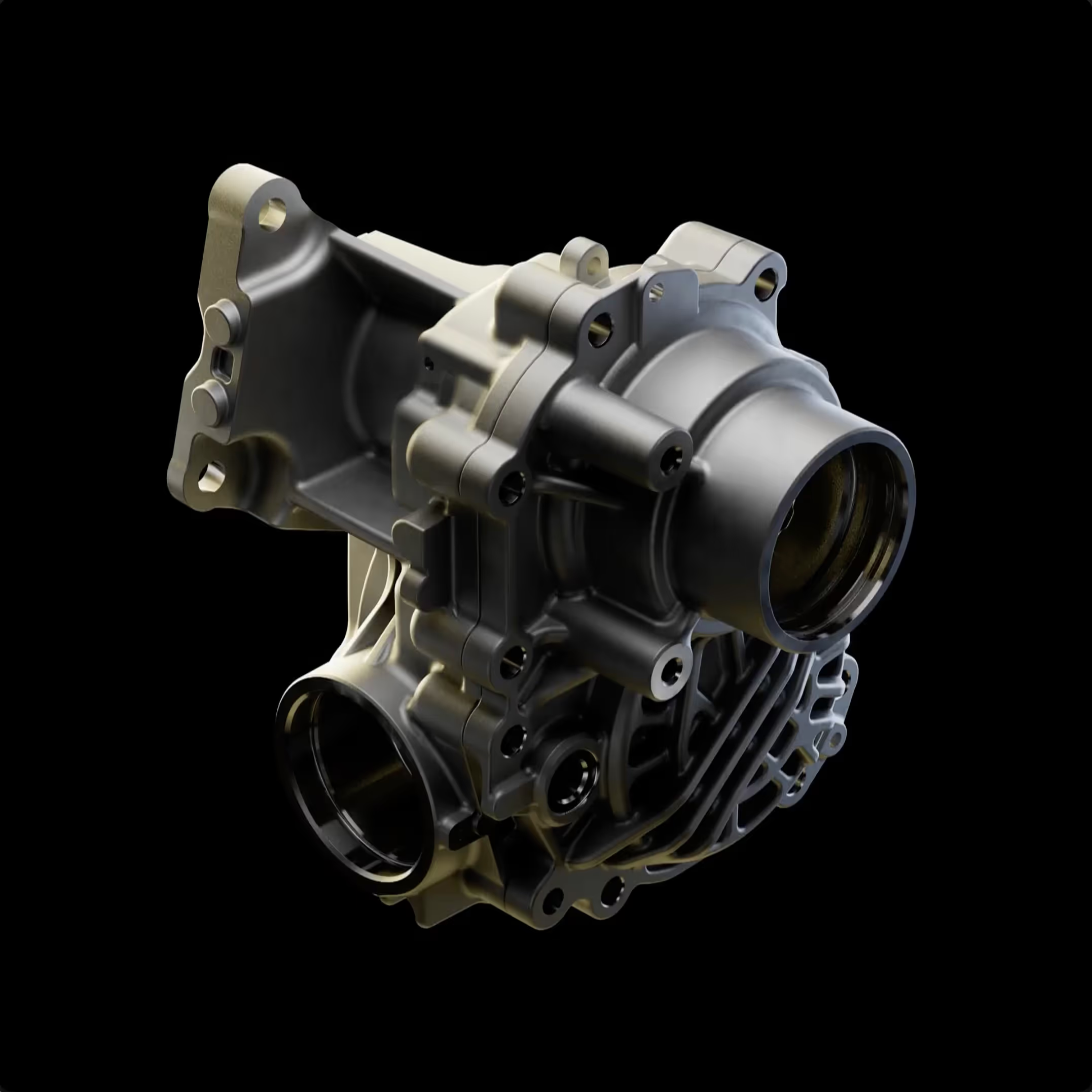


Precision at pace.
Every part of the way.
Formkon specialises in manufacturing of prototypes and small series in aluminium and magnesium for quality-driven companies across the mobility, defence and industrial sectors. Shaping change through domain expertise and advanced precision technology.





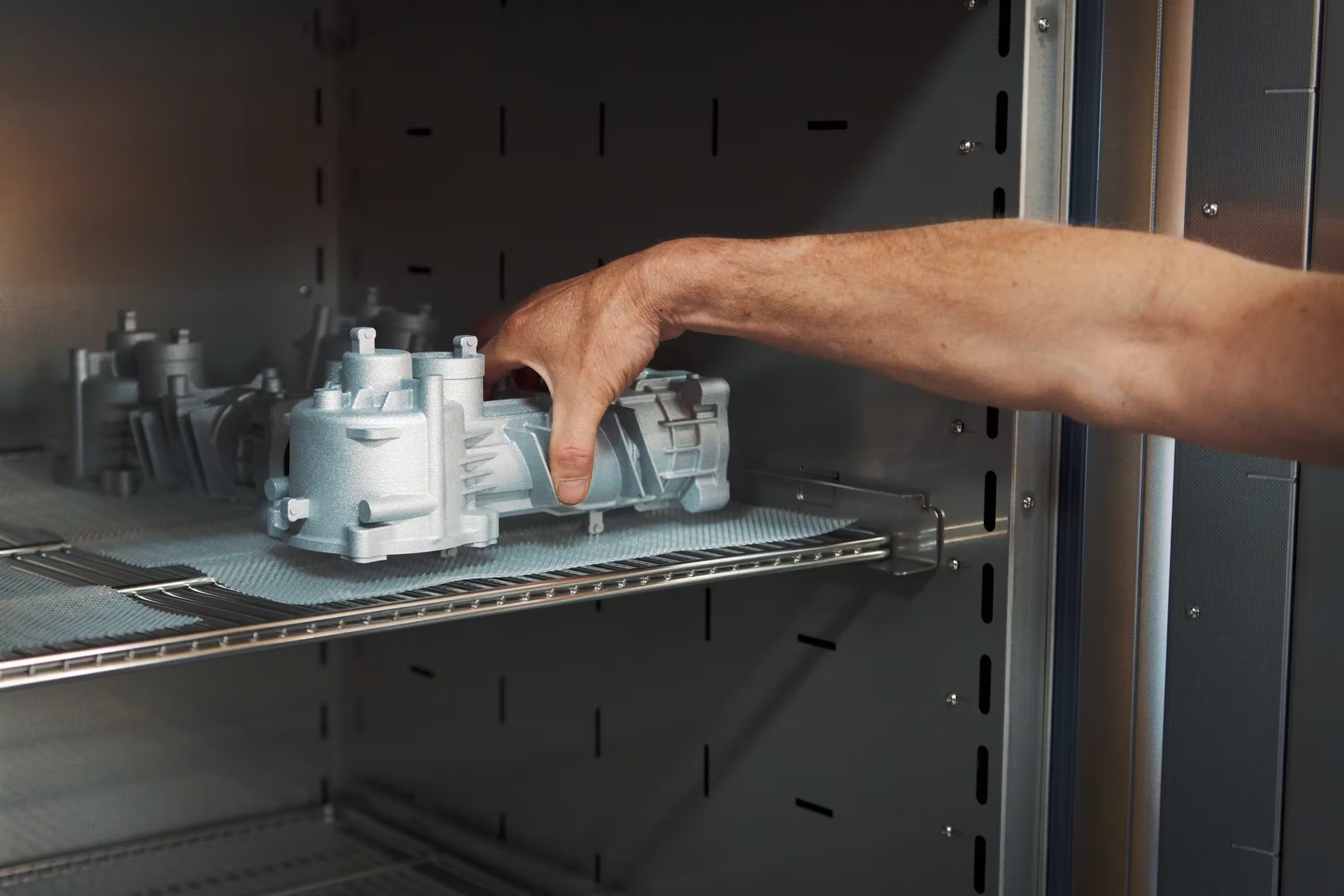
Move faster with precision and expertise
Accelerate your future development projects through an efficient process built on deep industry knowledge and advanced technology that will provide you with fully functional components from first delivery.

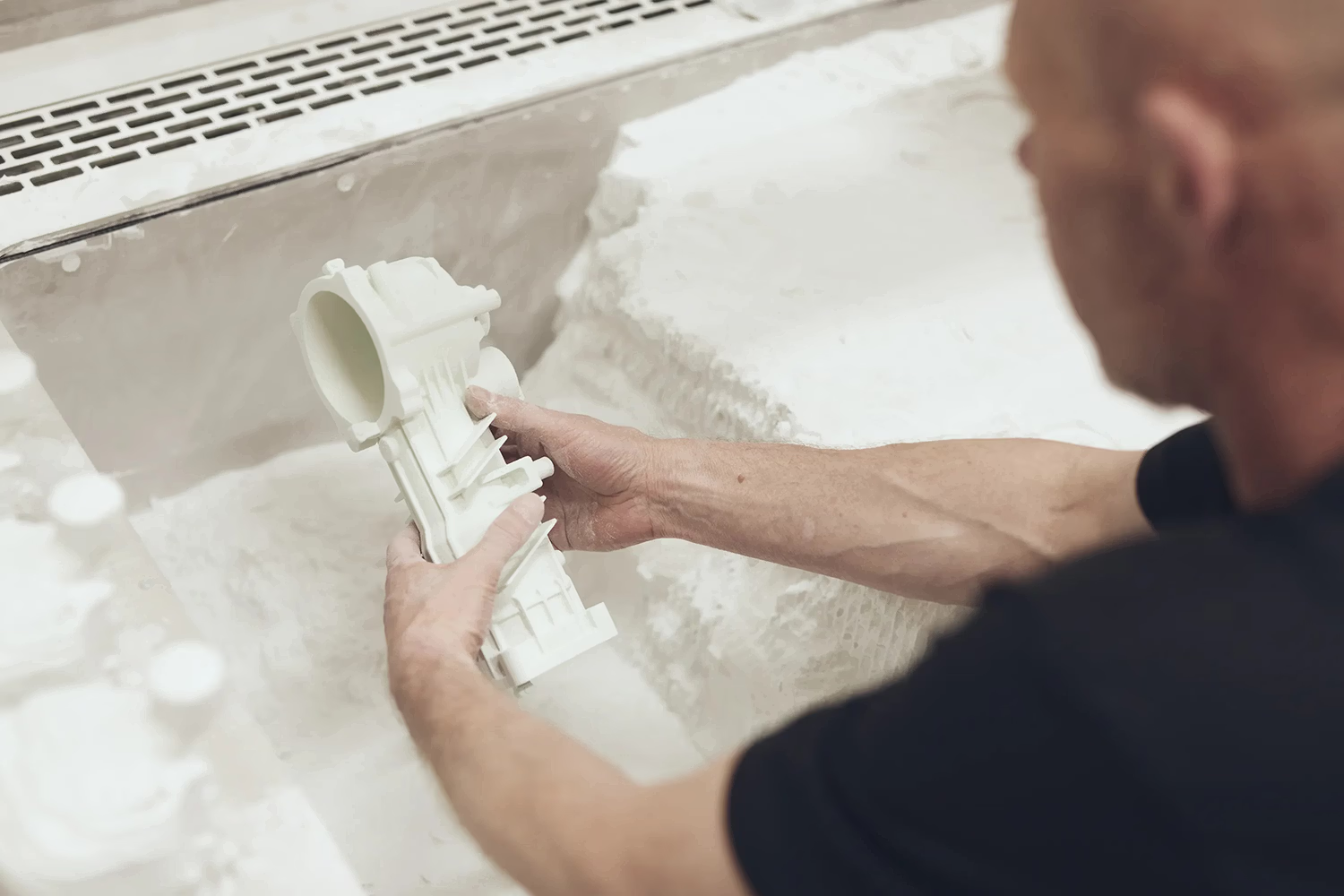
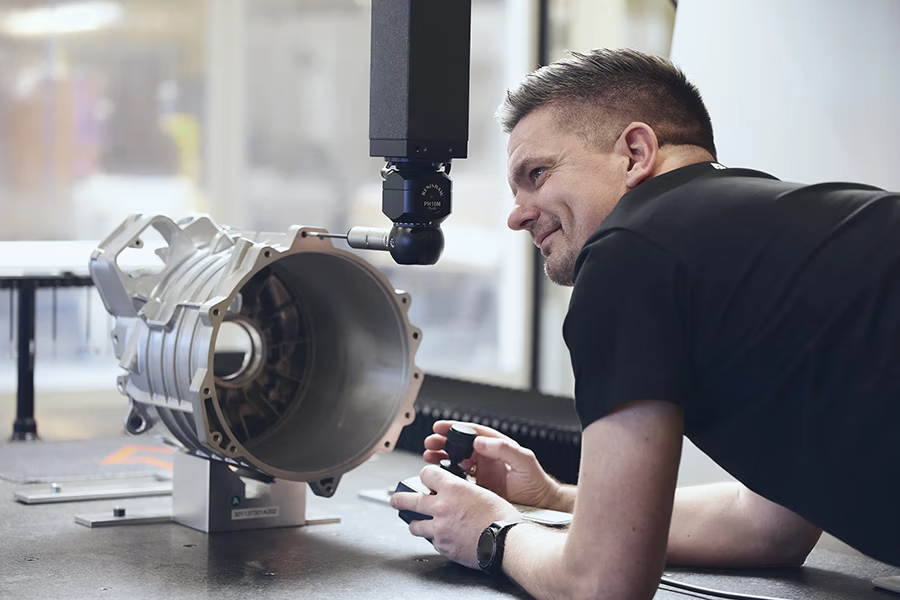
Flexible manufacturing across materials
We combine advanced manufacturing technologies with engineering expertise to deliver high-quality aluminium and magnesium components, giving you the material advantages and manufacturing capabilities required for demanding applications.

"In a market shaped by increasing global competition, pressured development processes, and demands for technological innovation, speed alone is not enough. It requires precision from the very first component to maintain momentum and progress throughout every project phase."
Peter Lynge Hjelm, CEO
We’re here to help you move forward
Submit your project details and receive expert guidance from our team of technical experts. We know that clarification is a key part of keeping momentum.

The achievable wall thickness depends on the selected sand casting technology as well as the component geometry, flow length and overall design. For some applications, local wall thicknesses around 1.5 mm can be achieved, while other components may require thicker sections to ensure proper mould filling and casting quality. Each design is evaluated individually.
Delivery time depends on component geometry, quantity and the selected tooling and moulding solution. In a fast-track setup, first castings can typically be ready within 3–6 weeks. We assess each project individually and provide realistic lead times as part of the quotation process.
Sand casting is a cost-effective manufacturing process for larger and more complex components, particularly in prototype, pre-series and medium-volume production. Compared to permanent tooling processes, sand casting offers lower tooling investment, greater design flexibility and the possibility to adapt tooling and moulding methods as project requirements evolve. Advanced sand casting technologies also enable complex geometries, internal features and thin-walled sections.
We specialize in aluminium and magnesium, but also work with plastics and a range of other metals depending on the application. These components are typically produced alongside aluminium or magnesium parts, allowing us to deliver complete solutions from a single source. Our focus remains on lightweight, high-performance components.
Lead time depends on the starting point and complexity. CNC machining from billet can in some cases be delivered in as little as one week. Components based on casting processes combined with machining typically require longer lead times. We always focus on selecting the optimal manufacturing route to minimize overall delivery time.
Yes, we offer inspection reports as part of the delivery. CNC machining and dimensional inspection are handled in-house, ensuring consistent quality, short communication paths, and reliable delivery times.
Yes, we can include surface treatments and assembly as part of the delivery. This includes processes such as SurTec 650, anodizing, Cerakote and powder coating. Through our established partner network, we ensure consistent quality, efficient coordination, and reliable delivery times.
Simply upload your CAD data and any available drawings or specifications. A brief description of your project is sufficient. Our engineering team will review the information and provide technical feedback together with a quotation.
We can support projects requiring up to 4400-ton clamping force, enabling production of very large components.
Yes. We use advanced simulation tools to analyse filling behaviour, material flow and potential casting challenges before production begins. This helps optimise tool design and process parameters while reducing development risk.
Absolutely. Early engineering input is often one of the most effective ways to improve manufacturability, reduce cost and minimise development risk. We regularly support customers with design reviews and casting optimisation.
Yes. Die casting is often the preferred choice when realistic validation is required. Unlike many prototype processes, die cast components closely represent the material properties, geometry and functionality of production parts.
Yes. We provide CNC machining, surface treatment, inspection, leak testing, assembly and other post-processing services. Components can be delivered as finished parts ready for testing or installation.
Typical lead times for die cast prototype components are between 6 and 15 weeks, depending on complexity, tooling requirements, material selection and post-processing needs.
Typical project volumes range from 50–2,000 prototype parts and up to approximately 5,000 units annually. Projects outside these ranges may also be suitable. We assess each project individually to ensure it is a good fit for both the application and our manufacturing setup.
Die casting is a manufacturing process where molten aluminium or magnesium is injected into a steel die under high pressure. The process enables the production of complex, dimensionally accurate components with excellent surface quality and repeatability.
Yes. Magnesium die cast components are widely used across automotive, aerospace, electronics, and industrial sectors. When properly engineered and manufactured, magnesium provides reliable performance and durability for demanding applications.
Both processes offer high precision and repeatability, but magnesium is considerably lighter than aluminium. Magnesium is often selected when weight reduction is a primary design objective, while aluminium may be preferred when thermal conductivity or corrosion resistance are key requirements.
Magnesium die casting is generally more efficient for complex components and repeat production volumes, while CNC machining offers greater flexibility for low-volume production and design changes. The best choice depends on geometry, quantity, and performance requirements.
Key advantages include exceptional weight reduction, high strength-to-weight performance, thin-wall design capability, dimensional consistency, and the ability to manufacture complex geometries efficiently. These characteristics make magnesium particularly attractive for performance-driven applications.
Yes. Magnesium die casting is well suited for prototype and pre-series development when lightweight performance, manufacturability, and functional validation are important before moving into larger production volumes.
We focus on prototypes, pre-series, and low to medium volume production. Typical quantities range from 50 to 5,000 units, depending on component complexity, tooling requirements, and application needs.
We deliver parts within 6–15 weeks. This timeframe covers all production stages, including simulation, tool manufacturing, casting, post-processing, and quality control. Contact us to discuss your project requirements and expected timelines.
Magnesium die casting can achieve high dimensional accuracy and repeatable quality across production runs. Final tolerances depend on component geometry, alloy selection, tooling design, and any secondary operations such as CNC machining.
Common magnesium die casting alloys include AZ91, AM60, and AM50. These alloys are selected based on factors such as strength, ductility, corrosion resistance, impact performance, and manufacturability.
Magnesium is approximately 30% lighter than aluminium, making it one of the lightest structural metals available. The exact weight reduction depends on component geometry and design requirements.
Magnesium is significantly lighter than aluminium while still offering excellent mechanical properties. For many applications, magnesium enables greater weight reduction, improved stiffness-to-weight performance, and increased design flexibility without compromising functionality.
Magnesium die casting is used to manufacture lightweight, high-performance metal components for industries where reducing weight can improve efficiency, handling, and overall product performance. Common applications include automotive components, electronics housings, aerospace parts, robotics, and industrial equipment.
Magnesium machining is widely used in aerospace, automotive, robotics, electronics, defence, medical technology, and industrial equipment manufacturing. These industries often benefit from magnesium's lightweight properties, precision machining capabilities, and ability to support high-performance applications.
Yes. Magnesium can be machined safely when proper manufacturing procedures and process controls are followed. Professional machining environments use dedicated equipment, chip management, and safety protocols specifically designed for magnesium processing.
Yes. Modern CNC machining technologies can produce highly complex features, intricate details, and critical interfaces with excellent precision. This makes magnesium machining suitable for demanding technical applications that require both lightweight performance and geometric complexity.
Magnesium machining is often the preferred choice when tight tolerances, rapid design iterations, and tooling-free production are required. It is particularly effective for prototypes, functional testing, and low-volume manufacturing where flexibility and development speed are important.
Both materials can be machined with high precision, but magnesium is significantly lighter than aluminium and generally offers faster machining speeds. Aluminium may be preferred when thermal conductivity or corrosion resistance are primary requirements, while magnesium is often selected when minimizing weight is the main objective.
Magnesium machining removes material from solid stock using CNC equipment, while magnesium die casting forms components by injecting molten magnesium into a mould. Machining offers greater flexibility and is ideal for prototypes and low-volume production, whereas die casting is generally more cost-effective for larger production volumes.
Yes. Magnesium machining is an excellent choice for prototype development because components can be produced directly from CAD data without tooling investments. This allows designs to be validated, tested, and refined quickly before production decisions are made.
Magnesium machining is particularly well suited for prototypes, pre-series components, and low to medium volume production. Typical quantities range from single prototype parts to several thousand units, depending on component complexity and project requirements.
We typically deliver machined magnesium components within 2–8 weeks, depending on complexity, quantity, material availability, and post-processing requirements. Contact us to discuss your project timeline and specific manufacturing needs.
Commonly machined magnesium grades include AZ31B, AZ61A, and AZ80A. Material selection depends on factors such as strength requirements, corrosion resistance, machinability, and the intended application.
Magnesium machining can achieve very tight tolerances depending on component geometry, machining strategy, and application requirements. CNC machining is particularly well suited for components that require precise dimensions, critical interfaces, and consistent repeatability.
Key advantages include exceptional machinability, lightweight performance, tight tolerances, rapid prototyping capability, and the ability to manufacture complex geometries without dedicated tooling. This makes magnesium machining particularly attractive for development projects and low-volume production.
Magnesium offers an excellent combination of low weight, good mechanical properties, and outstanding machinability. Compared to many other engineering metals, it can be machined efficiently while helping reduce overall component weight and improving product performance.
Magnesium machining is used to manufacture lightweight, high-precision components for industries where weight reduction, dimensional accuracy, and design flexibility are important. Common applications include aerospace components, robotics, electronics housings, automotive parts, and industrial equipment.
3D printing is ideal for early-stage prototyping, concept validation, and rapid design iterations. Aluminium die casting is better suited for functional end-use components, offering greater mechanical strength, repeatability, and cost efficiency when moving into production.
Die casting uses high-pressure injection of molten metal into a reusable steel mould, enabling high production rates, tight tolerances, and excellent surface quality. Sand casting uses disposable sand moulds and is generally better suited for larger components, lower production volumes, or designs that do not require the same level of precision and repeatability.
Aluminium die casting is a faster and more repeatable manufacturing process, making it well-suited for medium to high production volumes. Investment casting is often preferred for highly complex geometries, lower production volumes, or applications requiring specific material properties and design flexibility.
Aluminium die casting is generally more cost-efficient for complex geometries and medium to high production volumes, as multiple components can be produced quickly and consistently from the same tool. CNC machining offers greater flexibility for low-volume production and highly customized parts, making it a suitable choice when tooling investment is not justified.
Aluminium die casting offers a combination of high dimensional accuracy, excellent repeatability, efficient production rates, and the ability to produce complex geometries. Compared to many alternative manufacturing methods, it can reduce material waste, minimize secondary machining requirements, and provide a cost-effective route to scalable production.
Yes. Aluminium die casting can be used for prototyping, especially when there is a need to validate component functionality, material properties, or production feasibility before scaling to series production. Combined with engineering support and rapid tooling strategies, it can help accelerate product development and reduce time-to-market.
Aluminium die casting is often the preferred choice when producing complex components in medium to high volumes, particularly where dimensional accuracy, repeatability, and cost efficiency are important. The process is well-suited for applications that require lightweight yet durable components with consistent quality across production batches.
We focus on prototypes and pre-series, primarily for the automotive industry. However, we also offer small series production, especially for other industries where production volumes are lower. Typical quantities range from 50 to 5,000 units.
We deliver parts within 6–15 weeks. This timeframe covers all production stages, including simulation, tool manufacturing, casting, and all post-processing steps and quality control. Contact us today to learn how our aluminium die casting solutions help drive your project forward with precision and reliability.
Some of the most commonly used aluminium die casting alloys include AlSi9CU3(Fe), AlSi10Mg(Fe), AlSi12(Fe), and various AlSi-based materials. These alloys are selected for their combination of castability, strength, corrosion resistance, and thermal performance, making them suitable for a wide range of industrial and technical applications.
Aluminium die casting can achieve high dimensional accuracy and repeatability, making it suitable for components with demanding fit and assembly requirements. Achievable tolerances depend on factors such as part geometry, alloy selection, and tooling design, while secondary operations such as CNC machining can be used when even tighter tolerances are required.
Aluminium die casting is used to manufacture high-precision metal components that require a combination of strength, low weight, and dimensional accuracy. The process is widely used in industries such as automotive, electronics, industrial machinery, robotics, aerospace, and defence, where consistent quality and repeatable production are essential.
Tool-free investment casting enables fast and cost-effective production of prototypes and small series without the need for expensive tooling. Key benefits include shorter lead times, lower development costs, greater design flexibility, easy design changes during development, ideal use for prototypes and low-volume production, and the ability to produce complex geometries and thin-walled parts. We use tool-free investment casting to help customers accelerate development and reduce initial investment costs.
Most investment casting prototypes are delivered within 1–3 weeks. If CNC machining or additional post-processing is required, the total lead time is typically 3–6 weeks. We focus on fast and reliable prototype delivery through an efficient in-house process.
Yes. We offer both CNC post-machining and quality inspection reports as part of the delivery. CNC machining, and dimensional inspection can be handled in-house, ensuring consistent quality, short communication paths, and reliable delivery times.
To provide an accurate quotation, we typically need a 3D CAD model, STEP format preferred, and technical drawings if available. Additional information such as material and alloy, quantities, and further requirements helps ensure a fast and precise quotation.
Yes. We are flexible regarding alloy selection and can also support customer-specific or special alloys depending on project requirements.
Investment casting is ideal for complex and thin-walled components. Depending on geometry, alloy, and part size, wall thicknesses down to approximately 1 mm, and in some cases even thinner, can be achieved. We use our experience in aluminium and magnesium investment casting to optimise gating and process parameters for lightweight components with high detail and dimensional accuracy. For extremely thin-walled geometries, we recommend sharing CAD data for technical evaluation, as achievable wall thickness depends on factors such as flow length, local geometry, and mechanical requirements.